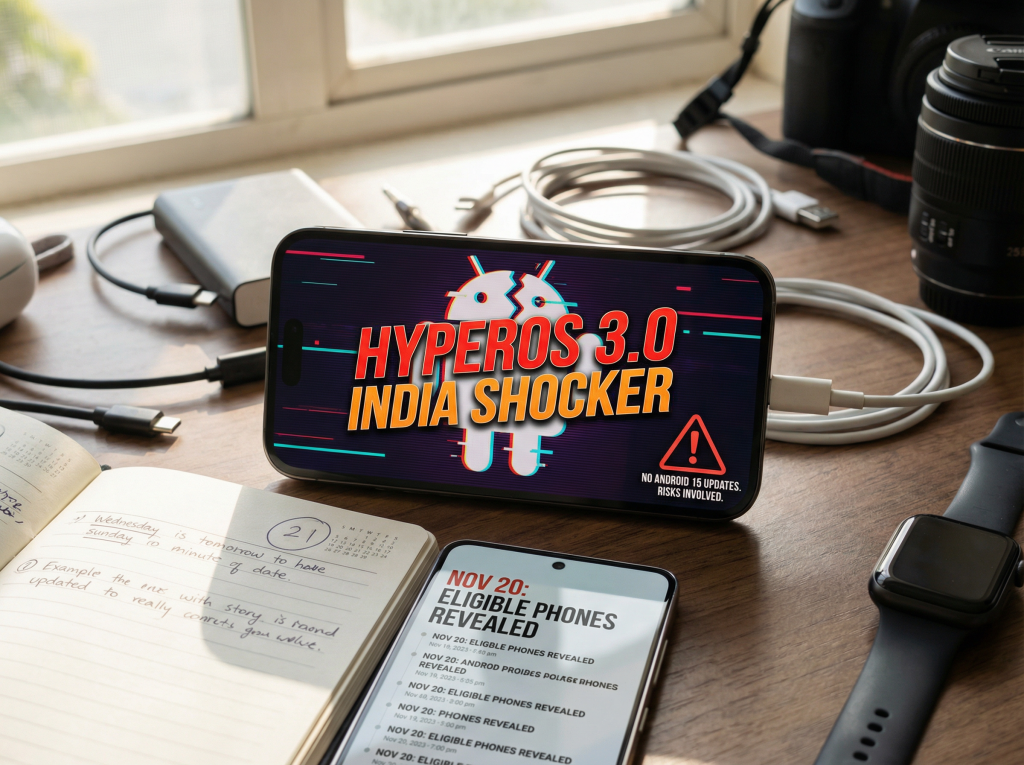
Xiaomi’s HyperOS 3 rollout in India has caught users off guard with a major policy shift, excluding devices on Android 15 from future upgrades like HyperOS 3.1, while focusing on Android 16-based updates. This decision prioritizes newer hardware for advanced AI and performance features, but it leaves many mid-range owners facing shortened support cycles. As of late November 2025, eligible devices for the initial HyperOS 3 update have been revealed, sparking debates on value and risks.
Understanding HyperOS 3 and Its Indian Rollout
HyperOS 3 represents Xiaomi’s latest software skin, emphasizing seamless integration across devices like phones, tablets, and wearables. Launched globally in September 2025, it builds on Android’s foundation to deliver faster animations, smarter AI-driven tools, and optimized battery life without heavy resource demands. In India, Xiaomi confirmed the update’s arrival via social media, teasing a “faster, smarter, and more seamless” experience tailored for local users.
The rollout aligns with Xiaomi’s strategy to unify its ecosystem under HyperOS, replacing MIUI for a more cohesive interface. Key enhancements include refined icons, dynamic wallpapers, and improved privacy controls, making daily interactions more intuitive. Indian users can expect phased deployment starting with flagships, similar to China’s approach where the update debuted on models like the Xiaomi 15 series.
However, the shocker lies in Xiaomi’s dual-track versioning: HyperOS 3 variants based on Android 15 versus Android 16. Devices on the Android 15 build, aimed at older hardware, will receive core UI tweaks and security patches but miss out on incremental updates like HyperOS 3.1, which requires Android 16 compatibility.
Eligible Devices for HyperOS 3 in India – November 2025 Update
As of November 20, 2025, Xiaomi has outlined the first wave of eligible devices for HyperOS 3 in India, prioritizing recent flagships and select mid-rangers. The Android 16-based version targets models like the Xiaomi 15, Xiaomi 15 Pro, and Xiaomi 15 Ultra, already testing stable builds such as OS3.0.1.0.WOCINXM. Other confirmed phones include the Xiaomi 14 series, including the 14, 14 Pro, and 14 Ultra, expected to go global by month’s end with optimizations for stuttering and battery drain.
Mid-range options like the POCO X7, POCO X7 Pro, and Redmi Note 14 Pro joined the rollout starting November 18, bringing Android 16 features to budget-conscious buyers. The full list extends to foldables such as the Xiaomi MIX Flip and tablets like the Xiaomi Pad 6S Pro 12.4, ensuring broad ecosystem coverage. Notably, the Android 15 variant is limited to testing on about 12 devices, including the Xiaomi 13 Lite, POCO F5 Pro, and Redmi Note 13 5G series, signaling these as the last major update for many.
This selective eligibility means over 15 devices, such as the POCO F5 5G, POCO M6 Pro, and Redmi K60 series, won’t progress beyond HyperOS 3’s Android 15 build to HyperOS 3.1. Xiaomi’s internal logs confirm this cutoff, urging users to check their model’s software version before updating.
The Android 15 Exclusion: Why No HyperOS 3.1 Upgrade?
The core issue stems from Xiaomi’s alignment of HyperOS updates with Android’s major releases, a shift from past policies. Devices on HyperOS 3’s Android 15 version, designed for hardware launched before mid-2025, lack the foundational upgrades needed for HyperOS 3.1’s advanced features like deeper AI integrations and enhanced security protocols tied to Android 16. This means no future patches beyond basic security for those phones, effectively ending their major support cycle.
In China, where HyperOS 3 launched in August 2025, the Android 16 build rolled out first to newer devices, while Android 15 served as a bridge for legacy models. India follows suit, but the exclusion has frustrated users who expected longer support, especially for popular mid-rangers from 2023-2024. Experts note this move optimizes development resources but risks alienating loyal customers in price-sensitive markets like India.
Key Risks of Updating to HyperOS 3
Updating to HyperOS 3 carries potential pitfalls, particularly for Android 15 devices facing abrupt end-of-life support. Performance dips, such as increased battery drain or app incompatibilities, have been reported in early betas, compounded by the lack of future refinements in HyperOS 3.1. Users risk bricking their devices if updates encounter bugs, as seen in past Xiaomi rollouts where rushed deployments caused boot loops.
Security is another concern: without HyperOS 3.1’s embedded Android 16 patches, Android 15 phones may lag in vulnerability fixes, exposing them to threats over time. Community forums highlight overheating and lag post-update on models like the POCO F5, advising backups and reviews before proceeding. For non-updaters, sticking to HyperOS 2.2 avoids these issues but misses new UI fluidity and ecosystem perks.
To mitigate risks, delay updates until stable versions arrive and monitor Xiaomi’s official channels for device-specific feedback. This cautious approach ensures users weigh the trade-offs between fresh features and long-term reliability.
Future Outlook for Xiaomi Users in India
Looking ahead, HyperOS 3’s India launch underscores Xiaomi’s push toward AI-centric software, but the Android 15 cutoff signals tighter hardware requirements for ongoing support. With over 122 devices potentially eligible across Xiaomi, Redmi, and POCO lines, the update promises a polished experience for the right models. Indian users should verify eligibility via settings or Xiaomi’s support site to avoid disappointments.
As competition heats up from Samsung and OnePlus, Xiaomi must balance innovation with inclusive updates to retain market share. For now, the November 20 revelations clarify the landscape, helping owners plan upgrades wisely.

